Ask MikeInstant answers · 24/7
Hi! I'm the campaign's information assistant — built from Mike's verified positions. Ask me anything about the plan, Mike's background, the issues, or how to vote. 🏷️
Here are the 66 questions Bardstown residents ask most about Mike Patel and the race for Mayor — the economy, jobs, housing, hunger, healthcare, City Hall, and how to vote on November 3, 2026.
Who he is, why he's running, and what he'd bring to City Hall.
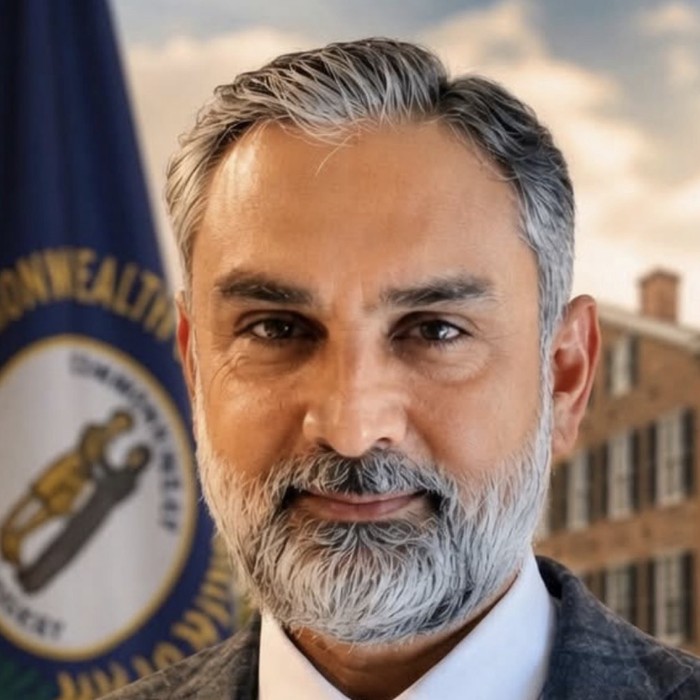
Manojkumar J. “Mike” Patel is a Bardstown healthcare professional and small-business owner running for Mayor of Bardstown, Kentucky in the nonpartisan election on Tuesday, November 3, 2026. He is an electroneurodiagnostic technologist — the medical professional who performs the brain-wave and nerve tests that help doctors diagnose seizures, strokes, and brain injuries — and the owner and operator of the 80-room Holiday Inn Express & Suites Bardstown on Morton Avenue, which employs 25 to 35 local people. He serves on the Bardstown–Nelson County Chamber of Commerce Board of Directors. He is not a career politician; he is a neighbor who decided Bardstown needed a mayor who works for the people.
Neither — and that is the point. The race for Mayor of Bardstown is officially nonpartisan. Mike Patel and incumbent Dick Heaton appear on the same ballot with no party label beside their names. Mike is running for every Bardstown voter, regardless of party, because the issues that matter most here — the cost of living, housing, hunger, and healthcare — do not check your voter registration before they show up at your door. He has said plainly that he will work with anyone, from any party, who wants to move Bardstown forward.
Mike has called this part of Kentucky home since he was five years old. He grew up in Campbellsville, Kentucky, where he was given the nickname “Mike” because his given name, Manojkumar, was hard for classmates and teachers to pronounce — the kind of thing small-town Kentucky has always done. That name stuck with him through school, through his career in healthcare, and all the way to Bardstown, where he built a business, raised his life, and put down roots. He is not a newcomer to this community; he is a neighbor who chose to build his life here and now wants to serve it.
Because after nearly a decade of the same leadership, too many Bardstown families are still struggling with rent, groceries, and healthcare. Mike has spent his career caring for people at the hardest moments of their lives, and he has spent years meeting a payroll and balancing a budget as a small-business owner. He believes that combination — caring for people and managing money — is exactly what is missing from City Hall. The incumbent ran unopposed in 2022 and has never had to defend his record in a contested election. Mike believes voters deserve a real choice and a mayor who shows up for them.
Mike works two jobs, and both of them matter to this race. In healthcare, he is an electroneurodiagnostic technologist — he performs EEG brain-wave tests and nerve-conduction studies that help physicians diagnose seizures, strokes, and neurological injuries. In hospitality, he is the owner and operator of the Holiday Inn Express & Suites Bardstown, an 80-room hotel he built on Morton Avenue that employs 25 to 35 local people. He is also Executive Vice President of MD Hospitality Group and president of Jay Hospitality Group, named for his late father. One job is about caring for people; the other is about meeting a payroll and watching every dollar. A mayor needs both skills.
An electroneurodiagnostic (END) technologist is a specialized healthcare professional who performs diagnostic tests of the brain and nervous system — most commonly electroencephalograms (EEGs), which record brain-wave activity, and nerve-conduction studies. Doctors use these tests to diagnose epilepsy and seizures, strokes, sleep disorders, and brain injuries. It is precise, patient-facing work that requires calm under pressure and attention to detail. Mike has spent his career at the bedside, caring for patients and their families at some of the hardest moments of their lives — and that experience shapes how he talks about healthcare access in Bardstown.
No. Mike has never held elected office, and he does not talk like a politician. He talks about the price of groceries, the rent that keeps climbing, the good jobs we are losing, and the neighbors who need a hand. He is a healthcare professional and a small-business owner who decided to step up because he believes City Hall has grown too comfortable and too disconnected from the people it serves. His campaign is built on the idea that a mayor should be a neighbor first — someone who answers the phone, shows up, and tells you the truth about what is possible.
Mike is running against incumbent Mayor Dick Heaton, who has held the office for nearly a decade across two stints — first appointed in April 2017, elected in 2018, and re-elected unopposed in 2022. This is a two-way, nonpartisan race. Mike's campaign is focused on the issues, not on personal attacks: he believes the voters of Bardstown deserve a clear choice between more of the same and a fresh, accountable approach to the job. You can read more about where Mike stands on the issues on the Issues page.
Three things. First, experience outside government: Mike has run a business, met a payroll, and balanced a budget when money was tight — skills the current administration has struggled with, as the city's own audit and budget documents show. Second, a focus on kitchen-table issues: the cost of living, housing, hunger, and healthcare, which are the things Bardstown families actually talk about. Third, accountability: Mike has pledged transparency, a direct mayor's hotline, and a willingness to explain every vote. He is not running to be somebody; he is running to do something for the families, workers, and seniors of Bardstown.
A mayor does not need to be a politician — a mayor needs to manage money, solve problems, and care about people. Mike has done all three. He has run an 80-room hotel with 25 to 35 employees, which means balancing a budget every single month: payroll, utilities, maintenance, and taxes. He has worked in healthcare, where he has seen firsthand what happens when a family cannot afford care or find a provider. And he has served his community on the Chamber of Commerce board and through quiet support for local food-security and senior-care efforts. That is the resume a mayor actually needs.
The occupational tax, the budget, and the money that leaves your paycheck.
Bardstown is a working town, but the numbers tell a hard story. The median household income here is $51,381 — about 19% below Kentucky's average and 36% below the nation's. Nearly 15% of our neighbors live in poverty, and unemployment in Nelson County has climbed above 5%. Meanwhile, the city's biggest revenue source is under pressure and its spending has been outpacing its income. The real problem is not one single number — it is that working families are falling further behind while City Hall keeps spending as if nothing has changed. Mike's plan starts with honesty about the math and discipline about the budget.
A mayor cannot lower the price of groceries or set the price of gas — anyone who promises that is not being straight with you. But a mayor controls real levers that affect what families pay: the city budget, fees and permits, zoning and land-use rules, and the city's tax structure. A mayor can hold the line on fees that hit working families hardest, cut red tape so small businesses can open and compete, modernize housing rules so more homes get built and rent stops spiraling, and use the office's bully pulpit to bring employers, nonprofits, and churches together. Mike will be honest about what is possible and fight for what matters.
The occupational license tax is a 1% tax on the wages and net profits of people who work in Bardstown, and it is the single largest source of city revenue — roughly 60% of the general fund, about $9.66 million of $16.17 million in the last audited year. That means the city's ability to fund police, fire, roads, and parks depends heavily on one tax. It also means that when the local economy softens, city services are at risk. Mike believes Bardstown needs to understand this structure plainly and plan for it — not pretend the good times will last forever.
This is one of the most important facts in this race, and most people have never heard it. Under the city's own tax code, distilleries are exempt from the occupational tax on the net profits they earn from manufacturing and trafficking alcoholic beverages. Every working person in Bardstown pays 1% of their wages into the city's general fund — but the signature industry that built this town is carved out of that same tax on its liquor profits. Mike is not anti-bourbon; he is pro-fairness. He believes that when the city asks working families to carry 60% of its budget through one tax, the biggest industry in town should at least be part of the conversation about how the city pays its bills.
Mike's commitment is to hold the line on taxes and fees that hit working families hardest, and to demand that every existing tax dollar be spent wisely before anyone talks about asking for more. He believes the city's first job is to live within its means, fix the controls that let money go missing, and stop leaning on reserves to cover routine spending. If a future decision ever required more revenue, Mike would make the case to voters in the open — with the numbers on the table — rather than slipping it through. That is the standard he will hold himself to.
Small businesses are the backbone of Bardstown, and Mike is one of them. As mayor, he will cut red tape so it is faster and cheaper to open and grow a business here, make city fees and permitting predictable, and use the city's seat at the table to keep and attract good jobs. He knows from experience what government does to help small business — and what it does to get in the way. He will also make sure the city's purchasing and contracting are transparent, so local businesses can compete on a level playing field instead of watching contracts go to insiders.
The city's own documents show a pattern that should concern every taxpayer. In one recent year, the budget planned to draw nearly $9.8 million from reserves to cover a gap between revenue and spending. More recently, the city adopted a budget that again relies on reserves and on $25 million in new bond sales to make the numbers work. Reserves are a rainy-day fund, not a way to pay routine bills. Mike will bring the discipline of a business owner to City Hall: know what you have, spend less than you take in, and never hide a shortfall in the fine print.
The city recently issued a $25.68 million general-obligation bond to fund major projects, including the aquatic and sports center, a new police headquarters, and City Hall upgrades. That bond carries yearly payments of roughly $1.5 million out of the general fund — money that competes with police, fire, roads, and parks. Combined with budgets that lean on reserves, this is a real long-term obligation that voters deserve to understand. Mike's position is simple: big projects should be paid for honestly and explained clearly, and the city should not take on new debt without a plan to carry it.
Mike's economic plan has four parts. First, hold the line on fees and taxes that hit working families hardest. Second, cut red tape so small businesses can open and grow. Third, use the city's seat at the table to keep and attract good jobs — and to make sure the biggest industry in town is part of the solution. Fourth, run City Hall like a business: balanced budgets, transparent books, and no more leaning on reserves to cover routine spending. You can read the full plan on the Issues page.
The industry that built this town — and what happens if it slows.
Yes, and it is the most important economic story in this region right now. Major producers have paused distillation at Kentucky facilities, and at least one large distillery cut roughly 30% of its workforce in 2026. The city's own audited financial report flags “reported softening throughout the bourbon industry” as a potential threat to the general fund. When bourbon sneezes, Bardstown catches a cold — because so many local jobs, from production to hospitality to trucking, depend on it. Mike believes the city must plan for this reality now, not after the layoffs reach our neighbors.
If the slowdown continues, the pressure lands in three places: jobs, city revenue, and family budgets. Because the city depends on the occupational tax for roughly 60% of its general fund, a wave of layoffs would hit city services directly. And because distilleries are exempt from that tax on their liquor profits, the city has less cushion than it should when the industry cools. Mike's answer is to diversify the local economy, support small businesses and trades, and make sure the city is not caught flat-footed. Hope is not a plan — and Bardstown deserves a mayor who plans ahead.
Absolutely not. Bourbon built this town, and Mike wants it to thrive for another hundred years. His position is that the industry and the community are partners — and partners are honest with each other. Mike is not asking anyone to shut down or slow down. He is asking that the biggest industry in town be part of the conversation about how the city pays for the services everyone relies on, and that working families not be the only ones carrying the load. That is not hostility; that is good neighborliness.
A mayor does not create jobs directly, but a mayor sets the conditions for them. Mike will cut red tape so businesses can open and expand faster, make permitting predictable, support the trades and small manufacturers that employ so many Bardstown residents, and use the city's relationships to recruit employers who offer good wages. He will also invest in the basics that make a town attractive to employers — safe streets, reliable utilities, good schools, and a quality of life worth moving for. And he will make sure local businesses get a fair shot at city contracts.
The city and county have partnered on a large industrial park, and Mike supports responsible economic development that brings good jobs to the region. His concern is transparency and follow-through: residents deserve to know what is being built, who is paying for it, and what it will mean for traffic, utilities, and neighborhoods. Mike believes growth should be planned with the people who live here — not announced to them after the decisions are made. He will insist that development deals be explained in plain English and that the public can follow the process from start to finish.
Data centers have become a major local concern, and Mike takes it seriously. These facilities can consume enormous amounts of electricity and water, and they can change the character of a community if they are not planned carefully. Mike supports the city's cautious approach and believes any large project must be judged on three questions: What does it cost the city? What does it do to residents' utility bills and infrastructure? And what does it actually deliver in jobs and tax revenue? Bardstown should welcome good development and be skeptical of anything that takes more than it gives.
A city in Kentucky cannot set its own minimum wage — that is a state and federal matter, and Mike will not pretend otherwise. What a mayor can do is create the conditions for better-paying jobs: cut red tape for small businesses, support the trades and manufacturing, recruit employers who pay well, and hold the line on the fees and taxes that eat into a working family's paycheck. Mike will be honest about the limits of the office and aggressive about using every tool it does have.
Bardstown's future depends on whether a young person can build a career here — not just a summer job. Mike's plan is to make Bardstown a place where you can afford to stay: more housing that young families can actually buy, good jobs in the trades and small business, and a city that invests in the things young people care about, from parks to downtown to quality of life. He will also work to connect local students and workers with the employers who need them, so the next generation sees a future here instead of a reason to leave.
Rent, home prices, and keeping Bardstown affordable for the next generation.
The median home value in Bardstown has climbed to about $203,500, and rent has followed. More than one in five households here is “cost-burdened” — paying more of their income for housing than they can reasonably afford. The squeeze comes from a simple mismatch: not enough homes are being built to keep up with demand, and the rules that govern what can be built have not kept pace with what families actually need. When supply cannot grow, prices rise — and the people who feel it first are seniors on fixed incomes and young families just starting out.
A mayor cannot set home prices, but a mayor controls the rules that decide how many homes get built and what they cost. Mike will modernize the city's zoning so more homes — including duplexes, townhomes, and smaller starter homes — can be built where they make sense. He will support workforce housing and senior housing, partner with builders and nonprofits to create homes our neighbors can actually afford, and make sure new development does not push longtime residents out. Housing is the single biggest cost in most family budgets, and it is one of the few big costs a mayor can genuinely influence.
No. Mike's commitment is to hold the line on property taxes and the fees that hit homeowners hardest. He believes the city should live within its means and spend existing tax dollars wisely before asking residents for more. He also knows that rising assessments can raise a tax bill even when the rate stays flat — which is why he will fight for fairness for seniors and longtime homeowners who are being priced out of their own neighborhoods by growth they did not ask for.
Seniors on fixed incomes are squeezed from every direction — rising assessments, rising rent, rising utility bills, and the cost of staying in the home they have lived in for decades. Mike believes the city has a duty to protect the people who built this community. He will push for property-tax fairness, support senior housing options, and make sure the services seniors count on — from meal delivery to transportation — are funded and reliable. A city that takes care of its elders is a city that has its priorities straight.
Roughly four in ten Bardstown households rent, and renters are feeling the squeeze as much as anyone. Mike's housing plan helps renters by increasing the supply of homes — because when more housing is available, rents stabilize. He will also make sure city rules are fair and predictable for renters and landlords alike, and he will not let new development displace the longtime residents who make Bardstown a community. Everyone deserves a safe, affordable place to live, whether they own or rent.
Mike understands that people love their neighborhoods and do not want them bulldozed for the sake of growth. His approach is careful and local: new housing should fit the character of the area, be planned with input from the people who live there, and focus on the kinds of homes Bardstown actually needs — starter homes, workforce housing, and senior housing. He will not rubber-stamp development that ignores residents. Growth done right protects what people love about their neighborhoods while making room for the next generation.
Mike's housing plan has four parts: modernize zoning so more homes can be built; support workforce and senior housing; partner with builders and nonprofits to create homes neighbors can afford; and protect longtime residents from being pushed out by new development. The goal is simple — make it possible for a young family to buy their first home and for a senior to stay in theirs. You can read the full plan on the Issues page.
No neighbor — and no child — should go hungry in the Bourbon Capital.
In a county famous for its food and drink, too many neighbors do not know where their next meal is coming from. About one in seven Nelson County residents — roughly 6,950 people — are food insecure. For children, it is worse: about one in five kids, roughly 2,240 children, live in households that struggle to put food on the table. Local food banks distribute more than 774,000 pounds of food a year, and it is still not enough. This is not a distant problem — it is happening in our neighborhoods, to our neighbors.
A mayor cannot end hunger alone, but a mayor can convene, fund, and cut red tape — and that matters. Mike will back local food pantries and meal-delivery programs with real support, cut barriers for local food producers and farmers markets, and coordinate with churches, nonprofits, and schools so no senior or child in Bardstown goes hungry. He will also use the mayor's office to raise the profile of food security so it stops being an invisible problem. When the city leads, the whole community follows.
For homebound seniors, hunger and isolation go hand in hand — and transportation is often the real barrier. Local meal-delivery programs that bring food to homebound neighbors have faced cuts and transportation problems, and when a senior misses a meal, it is not just hunger; it is a health risk. Mike has already donated his hotel's trolley to help carry seniors and neighbors to meals and appointments, and as mayor he will work to make sure these programs are funded and reliable. No senior in Bardstown should go without a meal because they cannot get to one.
About one in five Bardstown children lives in a food-insecure household, and for many of them, school meals are the most reliable food they get. Mike will work with the schools, churches, and nonprofits to strengthen the programs that feed kids — during the school year and through the summer, when the need does not stop just because class is out. He believes that feeding children is not a political issue; it is the most basic responsibility a community has.
Yes. For years, Mike has quietly supported local efforts to feed and care for neighbors — the kind of work that does not make headlines but makes a town stronger. He donates his hotel's trolley to carry seniors and neighbors to meals and appointments, and he supports local food-security and senior-care efforts, often without anyone knowing his name was behind it. As mayor, he will do more of that work out loud, because the office can bring resources and attention that no individual can.
Mike's food-security plan has three parts: back our food pantries and meal-delivery programs with real support; cut barriers for local food producers and farmers markets; and coordinate with churches, nonprofits, and schools so no senior or child in Bardstown goes hungry. He will also use the mayor's office to connect the people who need help with the programs that provide it. You can read the full plan on the Issues page.
Mobile clinics, mental health, and standing up for our elders.
Because access to care is not an abstract policy debate in Bardstown — it is a matter of life and death. Nearly one in ten residents here is uninsured, and our community has fewer hospital beds per person than the state average. Our life expectancy is 74.7 years, below Kentucky's average, and deaths from addiction, overdose, and suicide run high. Seventeen percent of residents carry medical debt. A mayor cannot run a hospital, but a mayor can recruit providers, support clinics, expand preventive care, and use the office to connect families with the care they are entitled to. That is why healthcare is on Mike's agenda.
A mayor cannot fix the healthcare system, but a mayor can do real, concrete things: recruit and retain doctors, nurses, and providers; support the local hospital and clinics; expand preventive care, screenings, and health education; and treat addiction and mental health as the public-health crisis they are. A mayor can also convene partners — hospitals, universities, nonprofits, and churches — to bring services directly to the people who need them. Mike will use every one of those tools, because he has seen what happens when families cannot get care.
This is one of Mike's signature ideas, and it comes straight from his career in healthcare. Mike will work with partners like the University of Louisville and Baptist Health to bring free mobile health clinics to Bardstown — bringing screenings, checkups, and preventive care directly to seniors, the uninsured, and the underinsured who cannot easily get to a doctor. Mobile clinics meet people where they are: at senior centers, churches, and community events. It is a concrete way a mayor can expand access without waiting for anyone in Frankfort or Washington to act.
Mike treats mental health and addiction as the public-health crisis they are — not a moral failing. Bardstown's deaths of despair — from addiction, overdose, and suicide — run above the national rate, and too many families have lost someone they love. As mayor, Mike will support treatment and recovery services, work to reduce the stigma that keeps people from asking for help, and partner with local providers and nonprofits to expand access to care. He believes a city is judged by how it treats its most vulnerable residents.
Seniors are a priority for Mike, not an afterthought. He will protect the services seniors count on — meal delivery, transportation, and senior-center programs — and push for property-tax fairness so people who have lived here their whole lives are not priced out of their own homes. He has already donated his hotel's trolley to carry seniors to meals and appointments, and he will keep finding ways to help. Mike believes the city's first job is to take care of the people who built it.
Bardstown is home to hundreds of veterans, and Mike believes they have earned more than a thank-you. As mayor, he will work to connect veterans with the healthcare, housing, and benefits they are entitled to, support local veterans' organizations, and make sure city services are accessible to those who served. He will also use the mayor's office to raise awareness of veterans' needs and to partner with the groups already doing that work. Service to country deserves service in return.
A strong local hospital is essential to a healthy community, and Mike will be a partner to it. He will work to recruit and retain the doctors, nurses, and specialists that keep care close to home, support the hospital and its clinics, and use the city's relationships to help expand services. Mike knows that when families have to drive an hour for basic care, the whole community suffers. Keeping quality healthcare in Bardstown is a priority, not a talking point.
Seventeen percent of Bardstown residents carry medical debt, and it weighs on families long after the illness is over. A mayor cannot erase that debt, but a mayor can expand access to preventive care and screenings so people catch problems early, when they are cheaper and easier to treat. A mayor can also connect residents with programs and assistance they may not know they qualify for. Mike will treat medical debt as the family crisis it is — and work to keep people out of it in the first place.
Mike's healthcare plan has four parts: recruit and retain doctors, nurses, and providers; support the local hospital and clinics; expand preventive care, screenings, and health education; and treat addiction and mental health as the public-health crisis they are. He will also partner with institutions like the University of Louisville and Baptist Health to bring free mobile clinics to seniors and the uninsured. You can read the full plan on the Issues page.
What a mayor controls, what happened on the last watch, and how Mike would govern.
The mayor is the chief executive of the city. The mayor runs the day-to-day operations of city government, proposes and administers the city budget, oversees city departments like police, fire, public works, and utilities, and works with the City Council to set policy. The mayor also has real power over zoning and land use, city fees and permits, and the city's contracts and purchasing. And the mayor has the bully pulpit — the ability to bring people together and set the city's priorities. It is a hands-on job, and Mike intends to treat it that way.
The City Council recently voted to raise the mayor's salary from $30,000 a year to $66,000 a year, with future cost-of-living adjustments. Mike has been clear and honest about this: he did not ask for the raise, and he is not running for the paycheck. If elected, he will treat the salary as a matter of public trust and will be transparent about it. His focus is on the work, not the compensation — and he believes voters deserve to know exactly where their money goes.
This is a serious chapter in Bardstown's recent history, and voters deserve to know it. A former city finance director embezzled more than $764,000 from the city over a six-year period — taking cash, paying fake reimbursements, and making personal purchases with a city credit card. She pleaded guilty to federal wire fraud and was sentenced to 35 months in federal prison. The city recovered only part of the money. Six years of undetected theft happened on the current administration's watch. Mike's response is not to point fingers for its own sake, but to insist on the controls and oversight that would have caught it — because that is what accountability means.
The city's independent audit found a significant deficiency in how the city handles purchasing. Specifically, the auditor found that the city did not have written procurement standards that comply with federal requirements — even while it was spending federal money. The city acknowledged the finding and said it would adopt a written purchasing policy. Mike believes this is exactly the kind of weak control that lets money go missing, and that fixing it is not optional. Good government starts with basic financial discipline, and Bardstown deserves nothing less.
Yes — and he will put it in writing. Mike has pledged to run an open City Hall: budgets explained in plain English, contracts and spending posted where residents can see them, and decisions made in the open rather than in the fine print. He will publish a direct mayor's hotline so residents can reach him, and he will hold regular opportunities for the public to ask questions. His standard is simple: if the public cannot follow it, it should not be done that way.
These are major investments in Bardstown's future, and Mike supports good facilities for residents and first responders. His concern is how they are paid for and whether the public was given the full picture. The city took on a $25.68 million bond to fund these projects, with yearly payments of roughly $1.5 million out of the general fund — money that competes with other city services. Mike believes big projects should be paid for honestly, explained clearly, and planned so they do not crowd out the basics. He will bring that discipline to every major decision.
Mike owns a trolley, and he has offered to lend it — free of charge, with a driver and insurance — to help St. Vincent de Paul keep delivering meals and rides to seniors and neighbors in need while their own bus is out of service. This is not a campaign stunt; it is what a neighbor does when a neighbor needs help. Mike has quietly supported local food-security and senior-care efforts for years, often without anyone knowing his name was behind it. As mayor, he will keep showing up for the people who need a hand.
The mayor and the City Council have to work together to get anything done, and Mike will treat the Council as partners, not rivals. He will bring the Council complete information, explain his reasoning, and listen to theirs. He will not surprise them, and he will not hide problems. Mike's business experience taught him that you get the best results when everyone has the facts and a seat at the table. That is how he will govern — openly, respectfully, and with the goal of getting things done for Bardstown.
Bardstown and Nelson County share the same people, the same roads, and the same future, so the city and county have to work together. Mike will build a constructive, honest relationship with county leaders on the issues that cross city lines — water, roads, economic development, and public safety. He will be a straight dealer: no surprises, no backroom deals, and no playing politics with services residents depend on. When the city and county pull in the same direction, everyone in Bardstown benefits.
November 3, 2026 — how to vote, and how to help.
Election Day is Tuesday, November 3, 2026. Polls are open from 6:00 a.m. to 6:00 p.m. If you are in line by 6:00 p.m., you can still vote. This is a nonpartisan race for Mayor of Bardstown, so Mike Patel and Dick Heaton will appear on the same ballot with no party label. Make a plan for when and where you will vote — and bring a friend.
You can register to vote or update your registration online at govote.ky.gov, or through the Kentucky Secretary of State's voter portal. The registration deadline is Monday, October 5, 2026. If you have moved within Bardstown since the last election, update your address before the deadline — your old address determines your old precinct. If you are 17 and will turn 18 by November 3, you can register now and vote. Registration takes about five minutes.
Yes. Kentucky offers no-excuse early in-person voting on October 29, 30, and 31, 2026, plus excused in-person absentee voting on October 21–23 and 26–28. Early voting is a great option if you cannot make it to the polls on Election Day. Check the Vote page for the full schedule and locations, or visit the Kentucky State Board of Elections website to find the early voting site nearest you.
Your polling place depends on where you live in Bardstown. You can find your exact polling location through the Kentucky State Board of Elections website or by checking your voter registration at govote.ky.gov. The Vote page on this site has links to help you look it up. If you are not sure where to go, call the campaign at (502) 509-9877 and we will help you find it.
You can request a mail-in ballot through the Kentucky Secretary of State's portal at govote.ky.gov. The mail-ballot request deadline is October 27, 2026, so do not wait. Once you receive your ballot, follow the instructions carefully and return it by the deadline. If you have questions about the process, the campaign is happy to help — just call (502) 509-9877.
There are many ways to help, and every one of them matters in a local race this close. You can knock doors, make phone calls from home, host a yard sign, give rides to the polls, share the campaign on social media, or donate. A handful of committed volunteers can literally decide a race like this one. Visit the Get Involved page or call (502) 509-9877 to find out how you can help. Mike would be honored to have you on the team.
Yard signs are one of the most powerful tools in a local campaign — a sign in your yard tells your neighbors that Mike has your support. To request a yard sign, visit the Get Involved page or call the campaign at (502) 509-9877. We will get one to you as quickly as we can. If you can put a sign in a high-traffic spot, even better — that is how a grassroots campaign grows.
You can reach the campaign by phone at (502) 509-9877 or by email at [email protected]. We answer every message. You can also use the chat assistant on this site for instant answers to common questions. If you have a question, an idea, or a problem, reach out — Mike and his team want to hear from you.
Reach out — we answer every message. Or ask the chat assistant in the corner for an instant answer.
Email the Campaign →